
Oxidized Starch for Industrial Applications
A modified starch category valued for controlled viscosity, fluidity, stability, film-forming and binding characteristics. Oxidized starch is especially relevant to paper processing, coating, textile and selected food applications.
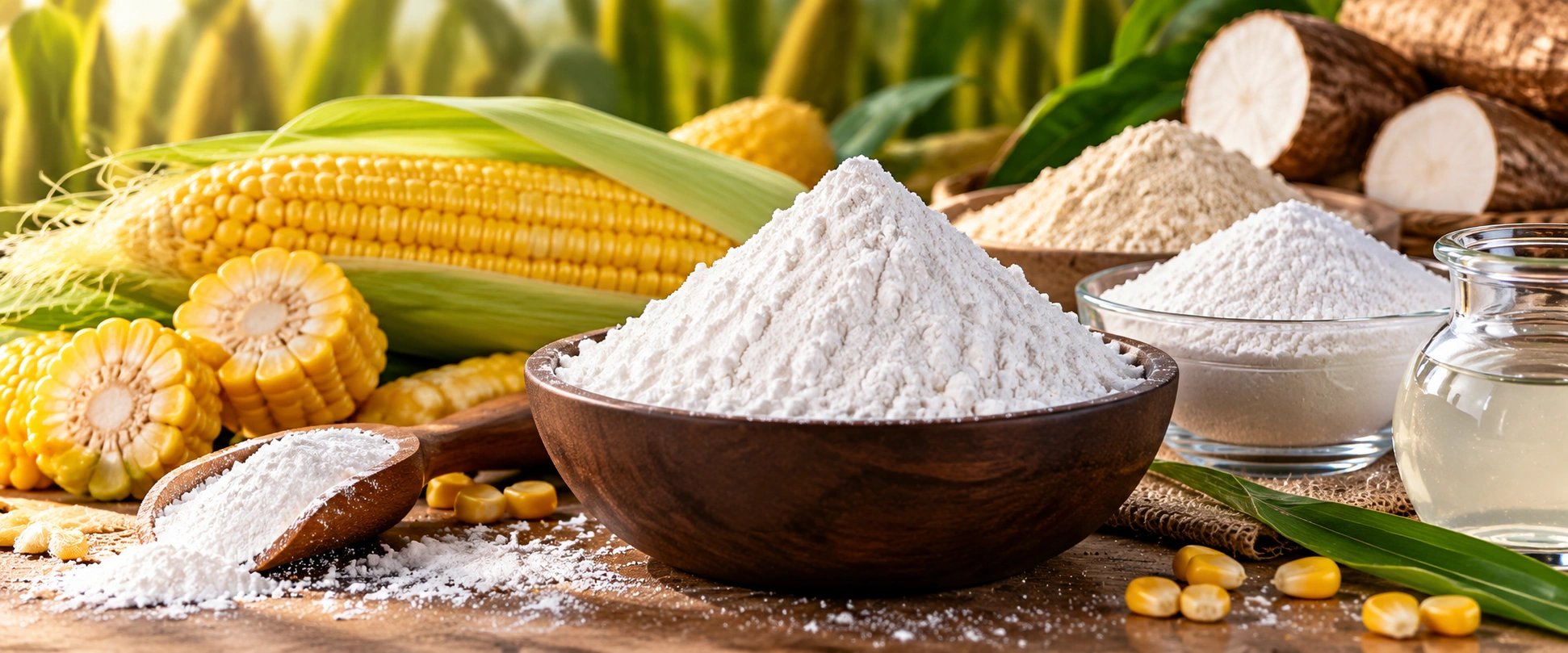
Understanding Oxidized Starch
Oxidized starch is produced by chemically modifying native starch. Oxidation introduces carbonyl and carboxyl groups and can change viscosity, clarity, stability, film formation and binding behaviour.

Designed around application requirements
Oxidized starches are used in both food and non-food industries. Their useful characteristics can include lower viscosity, good stability and clarity, along with film-forming and binding properties.
In paper processing, oxidized starch is commonly used for surface sizing and coating. Textile applications can include yarn sizing and finishing, while selected food applications use oxidized starch for thickening, stabilisation and texture-related performance.
Where Oxidized Starch Is Used
Application suitability depends on starch source, oxidation level, process conditions and required product specification.
Paper Processing
Used for surface sizing, coating and binding functions in paper and paperboard processing.
Textile Industry
Used for yarn sizing, weaving support and selected textile finishing applications.
Food Applications
Selected food applications can use oxidized starch for thickening, stability, clarity and texture-related functions.
Coating Applications
Film-forming and binding properties make suitable grades relevant to coating and surface-treatment systems.
Adhesive Systems
Oxidized starch can be used as a modified starch component in selected adhesive formulations.
Pharmaceutical Research
Oxidized starches have also been studied for pharmaceutical and controlled-release applications.
Binding Materials
Binding characteristics support applications where starch-based film and adhesion performance is required.
Surface Finishing
Selected grades can support surface treatment and finishing processes across industrial applications.
Properties that matter in industrial processing
Oxidation changes the structure and functional behaviour of starch. Exact performance depends on botanical source and processing conditions, so commercial specifications should be confirmed for the intended application.

From paper & textiles to selected food applications
Oxidized starch is a versatile modified starch category. Its application range is driven by functional changes created through oxidation, while the right grade depends on end-use process and buyer specification.
Oxidized Starch Sourcing Process
Akasa Overseas is positioned as an export house, so this page focuses on buyer-specific sourcing rather than claiming current inventory or manufacturing.
Understand Requirement
Application, grade, quantity, destination and documentation requirements are identified first.
Identify Supply Options
Suitable Indian supply options can be evaluated against the buyer’s requirement.
Align Specifications
Technical details and packaging requirements are coordinated before supply.
Export Coordination
Commercial and export coordination can then be aligned with agreed buyer requirements.
Questions About Oxidized Starch
Concise answers for buyers researching oxidized starch applications and sourcing from India.
What is oxidized starch?
What is oxidized starch used for?
Why is oxidized starch used in paper processing?
Is oxidized starch suitable for textile applications?
Can I source oxidized starch from India through Akasa Overseas?
Looking for an Oxidized Starch Grade?
Share the intended application, required grade, quantity, packaging and destination market. Akasa Overseas can use these details to structure the relevant Indian sourcing requirement.